Ove’s early childhood
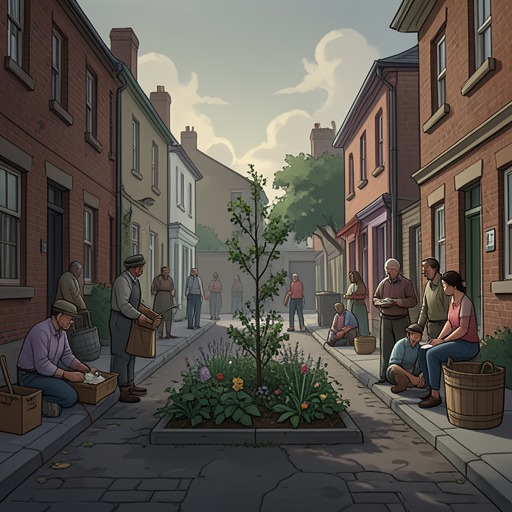
A Childhood of Numbers
[Ove](entity:character-recall-character-ove-a579b63cd97e) grows up in a modest home with his mother and father, finding comfort in mathematics and in the steady, practical routines he shares with his parents. His father, a railway worker, teaches him that engines reward care and that strength is not the same as size.
Those lessons become the quiet measure by which Ove judges his own life: work honestly, do what is right, and let actions speak louder than words.
When Ove is seven
His Mother Dies
[Ove](entity:character-recall-character-ove-a579b63cd97e)’s mother, who works at a chemical plant and smokes heavily, dies when he is seven. He remembers her most vividly singing by the kitchen window while he sits nearby with his mathematics book.
Her death leaves Ove and his father quieter, but they remain close through shared meals, card games, and their careful habit of feeding birds every other day.
When Ove is eight
A Saab for His Father
After [Ove](entity:character-recall-character-ove-a579b63cd97e)’s father repairs a director’s battered [Saab](entity:organization-recall-organization-saab-73e8657cd5fb), the director gives him the car. Ove watches his father explain its parts and mechanics, and decides that he will drive no make of car but Saab.
The gift becomes more than transportation: the car embodies the skill, loyalty, and pride that Ove associates with his father.
When Ove is nine
The Lost Wallet
While clearing a railway carriage with [Tom](entity:character-recall-character-tom-268ddde4835d), [Ove](entity:character-recall-character-ove-a579b63cd97e) finds a wallet containing a large sum of money. Tom claims the scattered possessions for himself, but Ove refuses to hand over the wallet.
Ove’s father steps between them and leaves the decision to his son. Ove turns the wallet in to lost property, learning that integrity means choosing what is right even when keeping quiet or taking the money would be easier.
When Ove is sixteen
An Orphan at Sixteen
[Ove](entity:character-recall-character-ove-a579b63cd97e)’s father dies in a railway accident when Ove is sixteen. With no family left, Ove refuses the vicar’s suggestion of a foster home and returns the portion of his father’s advance wages for the days he can no longer work.
The railway director offers Ove work in place of charity. Ove accepts, leaves school, and begins building an adult life around responsibility and self-reliance.
Almost two years after his father’s funeral
Tom Steals the Money
At the railway, [Tom](entity:character-recall-character-tom-268ddde4835d) is caught stealing money from a carriage and tries to blame [Ove](entity:character-recall-character-ove-a579b63cd97e). Ove knows who took it, but refuses to identify Tom, holding to the family principle against telling tales even when silence costs him his job.
The director recognizes Ove’s character and quietly arranges for him to continue as a night cleaner. Ove leaves the encounter without betraying Tom, but loses the railway work his father had loved.
Shortly after Ove turns eighteen
The House Under Threat
[Ove](entity:character-recall-character-ove-a579b63cd97e) buys his first car, a blue [Saab](entity:organization-recall-organization-saab-73e8657cd5fb), and learns that the authorities plan to demolish his family home as municipal boundaries are redrawn. The house is shabby, but it is the last place he has left from his parents.
Rather than sell, Ove decides to repair it. He takes a laboring job at a nearby building site and learns construction by watching and working alongside the builders.
The months after Ove turns eighteen
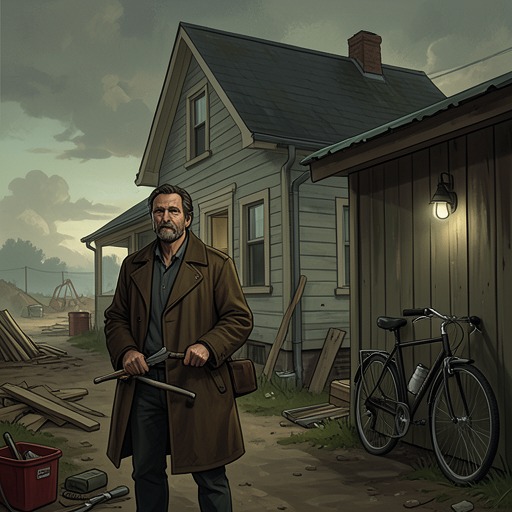
Building a Home by Hand
[Ove](entity:character-recall-character-ove-a579b63cd97e) works nights as a train cleaner and spends his remaining hours learning to rebuild his parents’ house. Experienced workers teach him practical skills, and one leaves him a toolbox with a note calling him “the puppy.”
Piece by piece, Ove restores the house himself. The work gives him purpose and deepens his conviction that a well-made structure, unlike people, can be understood and trusted.
After Ove finishes rebuilding his parents’ house
The House Burns
A fire breaks out at a neighbor’s home, where a child is trapped. [Ove](entity:character-recall-character-ove-a579b63cd97e) runs into the burning building with the elderly neighbor and helps carry the boy to safety, but the fire spreads to Ove’s own house.
The firefighters delay fighting the blaze while seeking authorization because the house lies on a municipal boundary. Ove watches the home he rebuilt burn, powerless against rules and procedure.
The day after the house fire
The False Insurance
After the fire, [Ove](entity:character-recall-character-ove-a579b63cd97e) learns that the friendly man who sold him insurance was a fraud. The insurance company has no record of a policy, and Ove has lost both his home and the money he paid for supposed protection.
Municipal officials then offer to buy the land, now without a house, for market value. Ove signs because there is no realistic way to keep it, carrying away a fresh hatred for the officials who treat his loss as paperwork.
After Ove loses his childhood home
The Stolen Watch
At the railway, [Tom](entity:character-recall-character-tom-268ddde4835d) taunts [Ove](entity:character-recall-character-ove-a579b63cd97e) about the fire and steals the old watch Ove inherited from his father. Ove has endured Tom’s bullying for years, but the theft of the watch finally pushes him past restraint.
Ove confronts Tom in the changing room, retrieves the watch, and knocks him down with one blow. His colleagues protect him with their silence, and Ove leaves the railway with the keepsake restored.
Later that year
A Soldier’s Rejection
After leaving railway work, [Ove](entity:character-recall-character-ove-a579b63cd97e) enlists for military service and excels in the physical tests. The prospect of a disciplined role appeals to him because it promises clear duties and a defined purpose.
A medical examination reveals a rare congenital heart condition, making him ineligible. The rejection deepens his sense that institutions can take away a future without offering anything in its place.
A few months after Ove is rejected from military service
The First Meeting
On a morning train, [Ove](entity:character-recall-character-ove-a579b63cd97e) sees [Sonja](entity:character-recall-character-sonja-3929cae28425), a lively student carrying books, and impulsively boards the train going the wrong way. He borrows clean clothes and sits beside her, listening as she talks about the books she loves.
Sonja’s warmth draws Ove out of his habitual silence. He wants to hear her speak for the rest of his life, though he does not yet know how to tell her that.
The three months after Ove meets Sonja
Three Months of Trains
[Ove](entity:character-recall-character-ove-a579b63cd97e) repeats the long journey each day simply to sit with [Sonja](entity:character-recall-character-sonja-3929cae28425) on her commute. He waits between trains, has his clothes pressed, and sleeps at the station, explaining to a sympathetic ticket clerk that a woman is involved.
Sonja finally tells him to meet her for dinner and invites herself along. Her directness breaks through Ove’s fear that he has misread her interest.
Three months into Ove and Sonja’s courtship
The Truth at Dinner
[Ove](entity:character-recall-character-ove-a579b63cd97e) arrives for dinner in his father’s suit and admits that he lied about doing military service. He explains that he is a train cleaner with a defective heart and that he invented the story because he wanted to keep riding with her.
[Sonja](entity:character-recall-character-sonja-3929cae28425) is not angry. She tells him she likes the way he listens and asks what he would truly want to do with his life. When he says he wants to build houses, she urges him to pursue that ambition.
Soon after their first dinner
A Course and a Career
[Sonja](entity:character-recall-character-sonja-3929cae28425) brings [Ove](entity:character-recall-character-ove-a579b63cd97e) brochures for an engineering correspondence course. His experience repairing his parents’ house and his gift for numbers help him move quickly through the material.
Ove earns his qualification, gets a job at the housing office, and works there for more than three decades. The career gives him the practical function and professional identity he had been seeking.
Early in their relationship
Sonja’s Father and Ove
[Sonja](entity:character-recall-character-sonja-3929cae28425) brings [Ove](entity:character-recall-character-ove-a579b63cd97e) to her father’s isolated home in the forest. The two men sit in awkward silence until Ove recognizes the father’s truck and asks about its engine, opening a conversation through their shared interest in machines.
Ove repairs the truck, and Sonja’s father responds with quiet approval. Their practical cooperation becomes the first real bridge between them.
The two autumns after their first visit to the forest
Learning to Fish
[Ove](entity:character-recall-character-ove-a579b63cd97e) learns to fish and helps maintain [Sonja](entity:character-recall-character-sonja-3929cae28425)’s father’s home and truck. The work gives him a place in the old man’s life, even though affection is never expressed openly.
The unspoken acceptance matters to Ove and Sonja: their relationship is becoming a durable household, not merely a romance between two very different people.
During Ove and Sonja’s visits to the forest
A Cat Named Ernest
[Sonja](entity:character-recall-character-sonja-3929cae28425)’s beloved cat, [Ernest](entity:character-recall-character-ernest-b6dc9da63db2), has the size and presence of a small lion. [Ove](entity:character-recall-character-ove-a579b63cd97e) distrusts cats but tolerates Ernest because he understands how deeply Sonja loves him.
Ove learns to fish with Sonja’s father, while Ernest joins the fishing trips and shares the catch. The arrangement gives Ove a family ritual he never expected to acquire.
The third year of their visits
Sonja’s Father Dies
[Sonja](entity:character-recall-character-sonja-3929cae28425)’s father dies one cool June night. [Ove](entity:character-recall-character-ove-a579b63cd97e) keeps busy repairing the cottage, stacking wood, and tending the grounds while Sonja grieves.
When [Ernest](entity:character-recall-character-ernest-b6dc9da63db2) is later killed by a car, Sonja mourns both the cat and her father at once. She asks Ove to love her twice as much; he promises, knowing that his love cannot grow beyond what it already is.
After Sonja’s father and Ernest die
The First Home Together
On the drive back from the forest, [Sonja](entity:character-recall-character-sonja-3929cae28425) tells [Ove](entity:character-recall-character-ove-a579b63cd97e) that she is pregnant and that they need a home of their own. Ove accepts the news in his practical way, immediately deciding that they will need a [Saab](entity:organization-recall-organization-saab-73e8657cd5fb) station wagon.
Their plans turn into a shared life in a row-house community. Ove and Sonja settle into routines that give his orderly world room for her warmth and imagination.
When Ove and Sonja move into the row-house community
Meeting Rune and Anita
[Ove](entity:character-recall-character-ove-a579b63cd97e) and [Sonja](entity:character-recall-character-sonja-3929cae28425) move into their new home on the same day as [Rune](entity:character-recall-character-rune-25e186f5ac9a) and [Anita](entity:character-recall-character-anita-cf1dee59b2b3). Sonja and Anita become close friends, and the couples establish the [Residents’ Association](entity:organization-recall-organization-residents-associ-9c5086541845) to manage their new community.
Ove and Rune begin as allies, working together on neighborhood rules and local issues. Their friendship is practical and taciturn, built around shared tasks rather than conversation.
During Sonja’s pregnancy
The Cribs
[Ove](entity:character-recall-character-ove-a579b63cd97e) worries about becoming a father and asks [Sonja](entity:character-recall-character-sonja-3929cae28425) for a manual. When she and [Anita](entity:character-recall-character-anita-cf1dee59b2b3) spend evenings talking about pregnancy, Ove and [Rune](entity:character-recall-character-rune-25e186f5ac9a) retreat to the shed and work on something they can understand.
Together they build two light-blue cribs for the expected babies. Ove tells Sonja he can repaint theirs if the child is a girl, revealing affection through the practical promise of making a place for their child.
During Sonja’s pregnancy
The Wedding
[Sonja](entity:character-recall-character-sonja-3929cae28425) asks [Ove](entity:character-recall-character-ove-a579b63cd97e) to make her his wife, and they marry simply at Town Hall with [Rune](entity:character-recall-character-rune-25e186f5ac9a) and [Anita](entity:character-recall-character-anita-cf1dee59b2b3) as witnesses. The two men argue over the restaurant bill while their wives quietly leave early.
The marriage settles into a lasting partnership organized around trust, shared routines, and Ove’s dependable care for Sonja.
During Sonja’s pregnancy
The Spain Journey
[Ove](entity:character-recall-character-ove-a579b63cd97e) and [Sonja](entity:character-recall-character-sonja-3929cae28425) take a bus tour in [Spain](entity:location-recall-location-0fe76f866976) at Sonja’s insistence. Ove grumbles at the unfamiliar customs, but he gradually finds himself enjoying the trip because Sonja is happy.
While she naps, Ove repairs a car, helps with a fence, works on a church wall, and assists with a stranded horse. Sonja later calls him an unlikely superhero, and the journey becomes the happiest week of his life.
The return journey from Spain
The Bus Crash
On the bus home, [Ove](entity:character-recall-character-ove-a579b63cd97e) gets up from his seat just before the driver, smelling of wine, veers into the central barrier. The crash kills the child [Sonja](entity:character-recall-character-sonja-3929cae28425) is carrying and leaves her with a permanent mobility impairment.
Ove is physically unable to reach her in the wreckage and spends the rest of his life haunted by that helplessness. Sonja lies unconscious for ten days before waking and taking his hand.
Ten days after the bus accident
Sonja Wakes
[Sonja](entity:character-recall-character-sonja-3929cae28425) wakes in the hospital and takes [Ove](entity:character-recall-character-ove-a579b63cd97e)’s hand. Ove tells her about the crash and the lost child, and they mourn together through the hours that follow.
Sonja eventually insists that they move forward with physiotherapy and life. Her resolve gives Ove a way to live beside grief rather than surrendering to it.
In the months after the accident
The Fight for Their Home
Officials suggest that [Sonja](entity:character-recall-character-sonja-3929cae28425) should be placed in a service home, implying that [Ove](entity:character-recall-character-ove-a579b63cd97e) cannot manage her care. Ove throws one of her shoes in anger and insists that they are going home together.
He rebuilds their house to accommodate Sonja’s wheelchair, lowering counters, altering doorways, and adding ramps. His work turns their home into an argument against the assumption that disability must mean separation.
Soon after Sonja returns to teaching
The School Ramp
[Sonja](entity:character-recall-character-sonja-3929cae28425) completes her teacher training and takes a job teaching children whom other educators have written off. The school lacks the access ramp she needs, and the authorities refuse to provide one.
After Sonja tells [Ove](entity:character-recall-character-ove-a579b63cd97e) that the fight has gone far enough, he builds the ramp himself overnight. Sonja returns to work, where she gives her students the care and high expectations they have been denied.
The first years in the row-house community
The Men’s Alliance
[Ove](entity:character-recall-character-ove-a579b63cd97e) and [Rune](entity:character-recall-character-rune-25e186f5ac9a) work together to resist the council’s plan to cut down the nearby woods. They campaign through appeals, letters, and petitions until the council gives up.
Their victory is one of the happiest periods in their friendship. The two men enjoy having a principled fight, even more than they enjoy winning it.
Across the decades after Ove and Sonja move in
The Neighborhood Feud
[Ove](entity:character-recall-character-ove-a579b63cd97e) and [Rune](entity:character-recall-character-rune-25e186f5ac9a)’s friendship gradually hardens into a long rivalry over cars, heating, trees, lawn care, snow clearance, and the [Residents’ Association](entity:organization-recall-organization-residents-associ-9c5086541845). Ove drives [Saab](entity:organization-recall-organization-saab-73e8657cd5fb); Rune eventually buys a BMW, a betrayal Ove never accepts.
Their quarrels obscure the old affection beneath them. [Sonja](entity:character-recall-character-sonja-3929cae28425) and [Anita](entity:character-recall-character-anita-cf1dee59b2b3) continue to value their friendship, while the two men turn small disagreements into a private language of loyalty and resentment.
During the early years in the row-house community
The Abusive Neighbor
A violent man moves into a neighboring home with a woman and her young son, [Jimmy](entity:character-recall-character-jimmy-7097cd16d51d). [Ove](entity:character-recall-character-ove-a579b63cd97e) and [Rune](entity:character-recall-character-rune-25e186f5ac9a) hear the man abusing the woman and the boy, and they decide, despite their current feud, to intervene together.
They confront the abuser, who attacks them with a knife, and drive him away. [Sonja](entity:character-recall-character-sonja-3929cae28425) and [Anita](entity:character-recall-character-anita-cf1dee59b2b3) help the woman and Jimmy remain in the house, giving the boy a safer childhood and binding the neighbors through an act of protection.
After the bus accident
The Council’s Denial
[Ove](entity:character-recall-character-ove-a579b63cd97e) writes to officials and newspapers about [Sonja](entity:character-recall-character-sonja-3929cae28425)’s care, the accident, and the barriers she faces at work. He repeatedly encounters bureaucrats who hide behind rules instead of taking responsibility.
The struggle gives Ove a target for his anger, but it also deepens his belief that the system takes people away from those who love them. Sonja eventually asks him to stop writing and leave room for life.
The nearly four decades after Ove and Sonja marry
The Long Marriage
[Ove](entity:character-recall-character-ove-a579b63cd97e) and [Sonja](entity:character-recall-character-sonja-3929cae28425) build a life around ordinary rituals: shared coffee, meals, errands, repairs, and Sundays at a café. Ove carries Sonja to and from work and helps her live at home as her mobility becomes more limited.
Sonja’s color and affection soften Ove without changing his essential nature. Their marriage becomes the stable center of his life, and he cannot imagine himself existing without her.
Four years before her death
Sonja’s Cancer
[Sonja](entity:character-recall-character-sonja-3929cae28425) is diagnosed with cancer. She continues teaching as long as she can, gradually reducing her hours before she is forced to stop.
[Ove](entity:character-recall-character-ove-a579b63cd97e) fights hospitals, specialists, and authorities on her behalf, while Sonja accepts what is happening more readily. She tells him that God took one child but gave her a thousand others in the students she taught.
Six months before the present-day events
Sonja’s Death
[Sonja](entity:character-recall-character-sonja-3929cae28425) dies after her illness. [Ove](entity:character-recall-character-ove-a579b63cd97e) stays beside her until hospital staff take her body away, arranges her burial, and returns to work on Monday as if routine can hold him together.
He loses the person who understood him best. The house remains full of her things, but Ove’s life becomes an empty succession of days without the voice and presence that gave them meaning.
Six months after Sonja’s death
Forced Retirement
[Ove](entity:character-recall-character-ove-a579b63cd97e)’s employers tell him they are retiring the older generation and urge him to slow down. After more than three decades at work, he is dismissed from the job that gave his days structure and purpose.
The loss compounds his grief. At home, he oils the kitchen counter and organizes tools, but the small tasks cannot replace the function he has lost.
Three weeks before the opening computer-shop scene
The First Neighborhood Inspection
[Ove](entity:character-recall-character-ove-a579b63cd97e) begins the day before dawn with his regular inspection of the row-house community. He checks signs, garages, guest parking, recycling, and the bicycle shed, correcting other residents’ mistakes even when no one has asked him to.
He is rigid about rules because he believes order prevents chaos. The inspection also fills the hours now left vacant by [Sonja’s death](entity:event-recall-event-sonja-436564cd9997) and his retirement.
The day after the opening scene’s reference point
The New Neighbors Arrive
A pregnant woman and her tall husband, [Parvaneh](entity:character-recall-character-parvaneh-f7c470ecc95a) and [Patrick](entity:character-recall-character-patrick-cc207070a4bb), move into the house opposite. Patrick reverses their trailer badly, scraping [Ove](entity:character-recall-character-ove-a579b63cd97e)’s house and crushing his mailbox, so Ove takes over and parks it himself.
The couple’s cheerful gratitude irritates him, but Parvaneh’s sharp replies unsettle his expectation that strangers will simply retreat. Their arrival begins the series of interruptions that slowly pulls Ove back into other people’s lives.
The evening the new neighbors move in
Dinner from Next Door
[Parvaneh](entity:character-recall-character-parvaneh-f7c470ecc95a) sends her daughters across with a warm container of rice, saffron, and chicken because she thinks [Ove](entity:character-recall-character-ove-a579b63cd97e) looks hungry. He is suspicious of the food but stores it rather than throwing it away, then eats it later.
The gesture is an early kindness Ove cannot quite reject. He tells himself that he keeps the food only because waste is unacceptable, while the unfamiliar warmth quietly enters his home.
The morning after the new neighbors arrive
Flowers at Sonja’s Grave
[Ove](entity:character-recall-character-ove-a579b63cd97e) visits [Sonja](entity:character-recall-character-sonja-3929cae28425)’s grave with flowers he has bought after arguing over a promotional price and refusing a small card surcharge. He explains the purchase as a matter of principle, though the flowers are the kind Sonja liked.
He admits that he is tired of being alone in the house and tells her he misses her. The scene reveals that his strict routines and quarrels cover a grief he does not know how to express.
Ove’s childhood and adulthood, recalled early in the present-day story
A Life of Principle
[Ove](entity:character-recall-character-ove-a579b63cd97e)’s memories explain the rules he lives by: his father’s example, the returned wallet, and his belief that a person is defined by what he does. He understands physical objects and practical work more readily than talk or abstraction.
[Sonja](entity:character-recall-character-sonja-3929cae28425) gives that black-and-white world its color. Her love does not make Ove less stubborn, but it lets him feel that he belongs somewhere.
Several days after the neighbors move in
Ove Plans to Die
[Ove](entity:character-recall-character-ove-a579b63cd97e) prepares his affairs, pays his bills, and makes a plan to hang himself in the house. He carefully protects the floor and leaves instructions, still concerned that people might damage the home after his death.
His preparations expose the depth of his isolation, but even his intended escape is shaped by responsibility and order. He cannot leave without trying to arrange everything properly.
During Ove’s first suicide-planning days
The Cat and Blond Weed
[Ove](entity:character-recall-character-ove-a579b63cd97e) finds [Blond Weed](entity:character-recall-character-blond-weed-1f64f6fd6a96) throwing stones at the injured stray cat near his shed. He intervenes, warns her away from his property, and tells her to keep her dog on a leash.
He insists that rescuing the cat does not mean he likes it. Still, his instinct to protect a vulnerable creature interrupts the indifference he has tried to cultivate.
The day after Ove prepares the hook
The Failed Hanging
[Ove](entity:character-recall-character-ove-a579b63cd97e) drills a carefully measured hole in the living-room ceiling and hangs himself from the hook. The rope snaps, dropping him to the floor before he can die.
He blames the poor quality of modern rope, cleans up the plastic sheets, and returns the tools to their places. The failure does not end his intention, but it gives him another day in which his neighbors can reach him.
Immediately after the failed hanging
The Radiator Call
[Patrick](entity:character-recall-character-patrick-cc207070a4bb) and [Parvaneh](entity:character-recall-character-parvaneh-f7c470ecc95a) return to thank [Ove](entity:character-recall-character-ove-a579b63cd97e) and ask to borrow a ladder and Allen keys. Patrick explains that he needs the ladder for a jammed window and the tools for an IKEA wardrobe.
[Anita](entity:character-recall-character-anita-cf1dee59b2b3) also asks Ove to look at the radiators in her house because [Rune](entity:character-recall-character-rune-25e186f5ac9a) is ill and cannot help. Ove grumbles about the old feud but agrees to go, taking practical responsibility despite his stated wish to be left alone.
Later that day
Bleeding the Radiators
[Ove](entity:character-recall-character-ove-a579b63cd97e) goes to [Anita](entity:character-recall-character-anita-cf1dee59b2b3) and [Rune](entity:character-recall-character-rune-25e186f5ac9a)’s home and bleeds the radiators. The task revives memories of his long argument with Rune over the neighborhood heating system and of the friendship they once shared.
He recognizes that he misses Rune, even though he has called him an enemy for years. A practical errand becomes the first small movement toward repairing their damaged connection.
Ove’s late adolescence, recalled during the present-day events
The House Ove Rebuilt
After refusing to sell his parents’ home, [Ove](entity:character-recall-character-ove-a579b63cd97e) works nights and rebuilds it by hand. The construction teaches him a trade and gives him a home that can be measured, repaired, and trusted.
A later fire destroys the house despite his efforts to save a neighbor’s child. Its loss becomes one of the experiences that convinces him that human institutions can undo what honest work has built.
The snowy morning after Ove first bleeds Rune’s radiators
The Ladder Accident
[Ove](entity:character-recall-character-ove-a579b63cd97e) sets out to die by filling his garage with exhaust fumes, but [Parvaneh](entity:character-recall-character-parvaneh-f7c470ecc95a) arrives with a nosebleed and demands a ride to the hospital because [Patrick](entity:character-recall-character-patrick-cc207070a4bb) has fallen from Ove’s ladder. Her husband has broken bones, and she has no driver’s license.
Ove abandons the garage plan and drives Parvaneh and the children to the hospital. He claims the trip is only to prevent [Sonja](entity:character-recall-character-sonja-3929cae28425) from scolding him, though his actions show that he cannot ignore people in need.
At the hospital that morning
The Hospital Clown
While [Parvaneh](entity:character-recall-character-parvaneh-f7c470ecc95a) visits [Patrick](entity:character-recall-character-patrick-cc207070a4bb), [Ove](entity:character-recall-character-ove-a579b63cd97e) is left with her daughters. A hospital clown attempts a coin trick and tries to keep the five-kronor piece Ove needs for the parking meter; Ove punches him.
The children are delighted by Ove’s indignation, while hospital security keeps him behind. His comic clash with the clown becomes one more reason the family feels connected to him rather than frightened away.
The morning after the hospital trip
The Cat in the Snow
[Ove](entity:character-recall-character-ove-a579b63cd97e) discovers the stray cat frozen in a snowbank. [Parvaneh](entity:character-recall-character-parvaneh-f7c470ecc95a) insists that he help, and she carries the nearly frozen animal into his house while [Jimmy](entity:character-recall-character-jimmy-7097cd16d51d) warms it against his body.
The scene revives Ove’s memories of [Ernest](entity:character-recall-character-ernest-b6dc9da63db2) and [Sonja](entity:character-recall-character-sonja-3929cae28425)’s love of cats. Ove lets the animal stay until it recovers, then reluctantly accepts that it has nowhere else to go.
The following morning
The Cat Comes Home
The cat wakes in [Ove](entity:character-recall-character-ove-a579b63cd97e)’s kitchen, and Ove provides the food and care the veterinarian recommends. He puts little socks on its paws and takes it to visit [Sonja](entity:character-recall-character-sonja-3929cae28425)’s grave.
There, Ove introduces the cat to Sonja and explains defensively that it was already broken when it arrived. The cat rests its head in his hand, creating the first quiet bond between them.
The next day
A Stranger in the Garage
[Lena](entity:character-recall-character-lena-f9a1b3a71248), a journalist, approaches [Ove](entity:character-recall-character-ove-a579b63cd97e) to interview him after hearing that he saved a man at the train station. Ove wants nothing to do with her and tries to get away, but she follows him into the garage.
When [Parvaneh](entity:character-recall-character-parvaneh-f7c470ecc95a) arrives and hears Lena’s account, she uses the journalist as leverage to persuade Ove to give her family another ride to the hospital. Ove is irritated at being manipulated, but he goes anyway.
The morning before the garage encounter
The Man on the Tracks
At the train station, [Ove](entity:character-recall-character-ove-a579b63cd97e) prepares to jump in front of an arriving train. Before he can act, a gray-suited man suffers a seizure and falls onto the tracks.
Ove climbs down, lifts the unconscious man to safety, and then steps out of the train’s path at the last moment. He cannot bring himself to make the train driver witness a death, and the rescue interrupts his second major suicide plan.
Later that morning
The Social Services Visit
[Ove](entity:character-recall-character-ove-a579b63cd97e) sees a municipal car arrive at [Anita](entity:character-recall-character-anita-cf1dee59b2b3) and [Rune](entity:character-recall-character-rune-25e186f5ac9a)’s home and learns that [Social Services](entity:organization-recall-organization-social-services-e5cbbfc34b09) intends to place Rune in a care facility. The official’s cold manner reminds Ove of the officials who once tried to control [Sonja](entity:character-recall-character-sonja-3929cae28425)’s life.
The threat makes Ove furious, but he initially believes the bureaucracy will take years to act. He does not yet understand that Anita has already been fighting the decision for a long time.
That same day
The Second Hospital Trip
[Ove](entity:character-recall-character-ove-a579b63cd97e) returns to his garage and again attempts suicide by routing exhaust into the car. [Parvaneh](entity:character-recall-character-parvaneh-f7c470ecc95a) interrupts him because [Patrick](entity:character-recall-character-patrick-cc207070a4bb) has been hospitalized and the family needs a ride.
Ove takes them to the hospital, where he argues about parking and gets into a fight with another clown after the children are left in his care. The family’s emergencies repeatedly pull him back into the world he is trying to leave.
After the hospital trip
The Cat’s New Home
[Parvaneh](entity:character-recall-character-parvaneh-f7c470ecc95a) and [Jimmy](entity:character-recall-character-jimmy-7097cd16d51d) bring the badly frozen cat to [Ove](entity:character-recall-character-ove-a579b63cd97e)’s home for warmth. Jimmy holds the animal against his chest, while Parvaneh and Ove struggle over how best to save it.
Ove allows the cat to stay, then takes it to the hospital when Jimmy has an allergic reaction. The cat’s survival gives Ove a responsibility he cannot dismiss, even when he insists it is not his pet.
The Spain trip and the months after the accident, recalled later
The Child Ove Never Met
During the return journey from [Spain](entity:location-recall-location-0fe76f866976), [Sonja](entity:character-recall-character-sonja-3929cae28425) and [Ove](entity:character-recall-character-ove-a579b63cd97e) feel their unborn child move. The bus crash ends the pregnancy and leaves Sonja permanently disabled.
Sonja finds a way to teach and care for children who need her, while Ove turns his grief into battles with authorities. Her determination gives both of them a future, though the lost child remains an enduring sorrow.
During the days after the cat is rescued
The Cat and Ove’s Past
[Ove](entity:character-recall-character-ove-a579b63cd97e) recalls how [Sonja](entity:character-recall-character-sonja-3929cae28425) once loved [Ernest](entity:character-recall-character-ernest-b6dc9da63db2) and how he learned to tolerate the cat for her sake. He remembers her father’s death and the losses that the couple endured together.
Those memories explain why Ove keeps the new stray cat. He will not admit that he cares, but the animal’s presence allows him to act on the tenderness Sonja had always drawn out of him.
Several days after the new neighbors arrive
The Bicycle and the Teenager
[Ove](entity:character-recall-character-ove-a579b63cd97e) finds a teenager trying to repair a woman’s bicycle outside the bicycle shed and orders him to put it away. The boy explains that it belongs to the girl he hopes will become his girlfriend.
Ove learns that the teenager, [Adrian](entity:character-recall-character-adrian-9d4b216e6fa4), has no tools and works two jobs to save for a car. He offers to help with the bicycle, then discovers that Adrian is considering a French car and reacts with predictable outrage.
The next day
The Café Bicycle Repair
[Ove](entity:character-recall-character-ove-a579b63cd97e) takes [Adrian](entity:character-recall-character-adrian-9d4b216e6fa4)’s bicycle to the café where the young man works and repairs it with him. Adrian admits that his father is in prison, and Ove gives him patient, practical instruction without making a show of sympathy.
At the café, Ove meets [Mirsad](entity:character-recall-character-mirsad-54ddec59d452) and learns that [Amel](entity:character-recall-character-amel-13bdfacbf15f)’s son is gay, though Amel does not know. Ove agrees to keep the confidence, recognizing that Mirsad is afraid of rejection by his father.
After Ove meets Mirsad and Amel
The Whiskey Visit
[Ove](entity:character-recall-character-ove-a579b63cd97e) returns to the café and asks [Amel](entity:character-recall-character-amel-13bdfacbf15f) for the whiskey he had once offered. Amel is grieving and angry because he cannot accept that his son is gay, while Ove has begun to understand the cost of refusing someone who needs a home.
The two men sit together without resolving everything. Ove’s willingness to return is a small admission that the young man and his father matter to him.
During the days after the cat is rescued
The Poisoned Dog Trap
After [Blond Weed](entity:character-recall-character-blond-weed-1f64f6fd6a96) threatens the stray cat again, [Ove](entity:character-recall-character-ove-a579b63cd97e) prepares an electrified sheet of metal as a trap for her dog. He imagines the animal being shocked for urinating on his paving stones.
Ove ultimately dismantles the trap, recognizing that being able to hurt someone is not the same as being justified in doing so. The choice marks a rare moment when he checks his own anger before it becomes action.
Several days after the bicycle encounter
The Postman’s Confession
[Adrian](entity:character-recall-character-adrian-9d4b216e6fa4) delivers [Ove](entity:character-recall-character-ove-a579b63cd97e)’s mail and tells him that [Sonja](entity:character-recall-character-sonja-3929cae28425) had once been his teacher. He says she was the only teacher who did not think he was stupid and that she helped him read Shakespeare.
Ove hears how deeply Sonja mattered to a boy who struggled with school. Rather than dismiss Adrian, he offers to help repair the bicycle and begins to see the young man as someone Sonja would have believed in.
The day after Adrian speaks about Sonja
The Driving Lessons Begin
[Ove](entity:character-recall-character-ove-a579b63cd97e) learns that [Parvaneh](entity:character-recall-character-parvaneh-f7c470ecc95a) has never had a driver’s license and agrees to teach her. He insists on a manual car and a proper license, despite her wish to learn in an automatic.
Their first lesson is chaotic: Parvaneh stalls the [Saab](entity:organization-recall-organization-saab-73e8657cd5fb) and nearly hits another car. Ove’s harsh instruction collides with her anxiety, but he stays beside her rather than abandoning the lesson.
During Parvaneh’s first driving lesson
A Lesson in Courage
When an SUV driver honks impatiently at [Parvaneh](entity:character-recall-character-parvaneh-f7c470ecc95a), [Ove](entity:character-recall-character-ove-a579b63cd97e) gets out, pulls the driver from his vehicle, and threatens him into silence. He then returns to the [Saab](entity:organization-recall-organization-saab-73e8657cd5fb) and reminds Parvaneh of everything she has already endured and accomplished.
Ove tells her she is not a complete twit. The blunt reassurance steadies her, and she manages to learn to drive that afternoon.
Across the decades of Ove and Rune’s friendship
The Fight with Rune Remembered
[Ove](entity:character-recall-character-ove-a579b63cd97e) remembers the succession of disputes that turned his friendship with [Rune](entity:character-recall-character-rune-25e186f5ac9a) into hostility: a pool, rats, trees, snow clearance, windows, heating, and competing cars. Even during their worst quarrels, they sometimes acted together when a neighbor needed protection.
Their arguments were never simply about objects. The cars and rules gave form to grief, loyalty, and pride that neither man could easily express.
Several days into the present-day events
The Garage Suicide Interrupted
[Ove](entity:character-recall-character-ove-a579b63cd97e) prepares to shoot himself with the old rifle [Sonja](entity:character-recall-character-sonja-3929cae28425)’s father left behind. He tapes tarpaulins over the walls, changes out of his suit to spare it, and turns on the radio so the cat will not be frightened by the gunshot.
[Adrian](entity:character-recall-character-adrian-9d4b216e6fa4) and [Mirsad](entity:character-recall-character-mirsad-54ddec59d452) arrive in the middle of the night. Ove mistakes them for burglars, but learns that Mirsad has come out to his father and been thrown out of the house.
The night Mirsad comes out to his father
Mirsad Finds Shelter
[Mirsad](entity:character-recall-character-mirsad-54ddec59d452) explains that his father has rejected him for being gay and that he has nowhere else to stay. [Ove](entity:character-recall-character-ove-a579b63cd97e) lowers the rifle and lets him remain in the house, even though he insists that it is not a hotel.
The decision turns Ove’s home into temporary shelter for someone vulnerable. His instinct to protect Mirsad echoes the values he learned from his father and the courage [Sonja](entity:character-recall-character-sonja-3929cae28425) always saw in him.
The morning after Mirsad arrives
The Morning Inspection Party
[Mirsad](entity:character-recall-character-mirsad-54ddec59d452) joins [Ove](entity:character-recall-character-ove-a579b63cd97e) and the cat on their inspection round. [Jimmy](entity:character-recall-character-jimmy-7097cd16d51d) catches up with them, still awake after a night out, and explains that [Social Services](entity:organization-recall-organization-social-services-e5cbbfc34b09) is moving ahead with a plan to place [Rune](entity:character-recall-character-rune-25e186f5ac9a) in a care facility.
Ove assumes the process can be delayed by appeals, but Jimmy reveals that [Anita](entity:character-recall-character-anita-cf1dee59b2b3) has already been fighting the decision for two years. Ove realizes that he has underestimated the urgency and that [Sonja](entity:character-recall-character-sonja-3929cae28425) would have wanted him to help.
That morning
The Municipal Car Blocked
[Ove](entity:character-recall-character-ove-a579b63cd97e) confronts the official in the white shirt about driving into the residential area to visit [Anita](entity:character-recall-character-anita-cf1dee59b2b3) and [Rune](entity:character-recall-character-rune-25e186f5ac9a). The official dismisses him and makes clear that the decision to place Rune has already been made.
Ove persuades [Patrick](entity:character-recall-character-patrick-cc207070a4bb) to borrow a trailer and uses it to box in the municipal car. The small act of defiance gives him a moment of satisfaction, but it cannot by itself stop the authorities from returning.
After the municipal car is boxed in
Ove Breaks Down
[Anita](entity:character-recall-character-anita-cf1dee59b2b3) and [Parvaneh](entity:character-recall-character-parvaneh-f7c470ecc95a) tell [Ove](entity:character-recall-character-ove-a579b63cd97e) that [Social Services](entity:organization-recall-organization-social-services-e5cbbfc34b09) intends to remove [Rune](entity:character-recall-character-rune-25e186f5ac9a) that week. Ove initially insists that the process will take years, then realizes that the decision is already imminent.
The prospect of losing Rune recalls the way Ove could not protect [Sonja](entity:character-recall-character-sonja-3929cae28425) from illness and bureaucracy. He closes the door on his neighbors and begins to cry, exhausted by the feeling that every fight ends in another loss.
The day before the removal order is due to be enforced
The Crib in Ove’s Living Room
[Parvaneh](entity:character-recall-character-parvaneh-f7c470ecc95a) sees the restored light-blue crib in [Ove](entity:character-recall-character-ove-a579b63cd97e)’s living room. Ove explains that it had only been gathering dust and suggests it could be repainted pink, for a girl or a boy.
The crib connects Ove’s memories of the child he and [Sonja](entity:character-recall-character-sonja-3929cae28425) lost with the family growing around him now. Parvaneh cries, and Ove pretends to object while allowing the gesture to speak for him.
The morning Social Services arrives for Rune
The Neighbors Stand Together
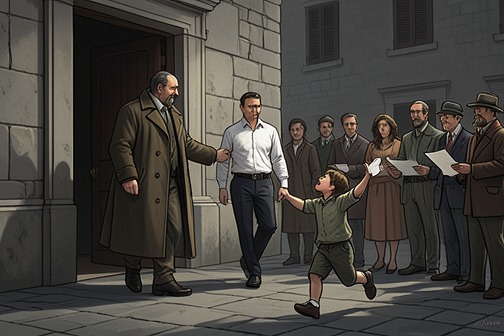
The official arrives with nurses to take [Rune](entity:character-recall-character-rune-25e186f5ac9a) from [Anita](entity:character-recall-character-anita-cf1dee59b2b3)’s home. Anita blocks the doorway and insists that she will care for her husband, while the officials argue that the decision has already been made.
[Ove](entity:character-recall-character-ove-a579b63cd97e) joins Anita, followed by [Parvaneh](entity:character-recall-character-parvaneh-f7c470ecc95a), [Patrick](entity:character-recall-character-patrick-cc207070a4bb), [Jimmy](entity:character-recall-character-jimmy-7097cd16d51d), [Anders](entity:character-recall-character-anders-4efb02d59ec6), [Adrian](entity:character-recall-character-adrian-9d4b216e6fa4), and [Mirsad](entity:character-recall-character-mirsad-54ddec59d452). [Lena](entity:character-recall-character-lena-f9a1b3a71248) arrives with evidence of irregularities in the placement process, and the group forces the official to retreat rather than remove Rune that day.
Immediately after the officials leave
Ove and Rune Reconcile
[Ove](entity:character-recall-character-ove-a579b63cd97e) stays behind to speak privately with [Rune](entity:character-recall-character-rune-25e186f5ac9a). The two men finally spend time together without their old arguments, and [Anita](entity:character-recall-character-anita-cf1dee59b2b3) later hears Rune laughing.
Their reconciliation does not erase decades of feuding, but it restores the human bond that had been buried under their disputes. Ove leaves with the knowledge that he has acted for the friend he once had.
The evening of the neighborhood confrontation
The iPad Birthday Gift
[Ove](entity:character-recall-character-ove-a579b63cd97e) buys an iPad for [Parvaneh](entity:character-recall-character-parvaneh-f7c470ecc95a) and [Patrick](entity:character-recall-character-patrick-cc207070a4bb)’s older daughter after learning that she wants one for drawing. He makes [Jimmy](entity:character-recall-character-jimmy-7097cd16d51d) help him choose the most capable model, despite his distrust of computers and his irritation at the price.
The girl is overwhelmed by the gift and calls Ove “Granddad.” Her drawing of him in bright colors, unlike the other figures, shows how fully she has made him part of her world.
That winter evening
The Burglary and Heart Attack
During his evening inspection, [Ove](entity:character-recall-character-ove-a579b63cd97e) sees burglars trying to break into a neighbor’s house and charges after them. A severe pain strikes his chest, and he collapses in the snow as the burglars flee.
[Parvaneh](entity:character-recall-character-parvaneh-f7c470ecc95a) reaches him and calls for help. Ove’s last thought before losing consciousness is that the ambulance must not drive into the residential area, because the rules still matter to him even at the edge of death.
That night at the hospital
The Heart Is Too Big
[Ove](entity:character-recall-character-ove-a579b63cd97e) undergoes emergency treatment while [Parvaneh](entity:character-recall-character-parvaneh-f7c470ecc95a) and the others wait anxiously. A doctor explains that Ove’s heart is enlarged and that medication can control the condition, though his remaining time is uncertain.
Parvaneh responds with laughter and says Ove is terrible at dying. Ove survives, surrounded by people who have become his family, and returns home four days later.
The evening Ove returns home from the hospital
Sonja’s Things in Boxes
[Parvaneh](entity:character-recall-character-parvaneh-f7c470ecc95a) and her daughters help [Ove](entity:character-recall-character-ove-a579b63cd97e) pack [Sonja](entity:character-recall-character-sonja-3929cae28425)’s belongings. He has resisted clearing the house because each object holds a memory, but he finally lets his neighbors help him make the first careful separations.
Parvaneh’s labor pains begin as the work ends, and the family returns to the hospital. Ove is present for the arrival of a new life after years in which he believed his own had ended with Sonja.
That night
A Boy Is Born
[Parvaneh](entity:character-recall-character-parvaneh-f7c470ecc95a) gives birth to a boy. [Ove](entity:character-recall-character-ove-a579b63cd97e)’s involvement in the family has carried him from reluctant neighbor to trusted presence through the pregnancy and the birth.
The baby’s arrival gives Ove a future to care about. He does not replace [Sonja](entity:character-recall-character-sonja-3929cae28425) or the child they lost, but he becomes part of a household where life continues around him.
Several years after Ove’s recovery
The Wedding and Adoption
[Mirsad](entity:character-recall-character-mirsad-54ddec59d452) and [Jimmy](entity:character-recall-character-jimmy-7097cd16d51d) marry, with [Ove](entity:character-recall-character-ove-a579b63cd97e) serving as Mirsad’s best man. [Amel](entity:character-recall-character-amel-13bdfacbf15f), overwhelmed by emotion, cannot manage a speech but names a sandwich after Jimmy as his gift.
The couple later adopt a daughter, who becomes a regular presence at [Anita](entity:character-recall-character-anita-cf1dee59b2b3) and [Rune](entity:character-recall-character-rune-25e186f5ac9a)’s home. Mirsad’s relationship with his father has also begun to heal, extending the circle of family around Ove.
The years after Ove’s heart attack
A Life of Useful Work
[Ove](entity:character-recall-character-ove-a579b63cd97e) resumes helping neighbors with repairs, construction problems, and household tasks. He teaches [Adrian](entity:character-recall-character-adrian-9d4b216e6fa4) practical skills and helps other residents with their homes, continuing to complain about their incompetence as he works.
The repairs give Ove a renewed function and a reason to spend his days among people. He slowly becomes a fixture in the community whose members once seemed to him like strangers and nuisances.
Almost four years after the new neighbors move in
A Quiet Death
One November morning, [Parvaneh](entity:character-recall-character-parvaneh-f7c470ecc95a) notices that [Ove](entity:character-recall-character-ove-a579b63cd97e) has not cleared the snow outside his house. She enters with the spare key and finds him dead in bed, his face peaceful and the cat resting beside him.
Ove dies naturally after years of surviving his attempts to end his life. Parvaneh takes the envelope he prepared for her and understands that he has left his affairs carefully arranged.
Immediately after Ove’s death
The Letter and the Estate
[Ove](entity:character-recall-character-ove-a579b63cd97e)’s letter gives [Parvaneh](entity:character-recall-character-parvaneh-f7c470ecc95a) instructions for the house, the cat, his paperwork, and the [Saab](entity:organization-recall-organization-saab-73e8657cd5fb), which he leaves to [Adrian](entity:character-recall-character-adrian-9d4b216e6fa4). He also reveals a large inheritance from [Sonja](entity:character-recall-character-sonja-3929cae28425)’s father and specifies money for Parvaneh’s children and [Jimmy](entity:character-recall-character-jimmy-7097cd16d51d)’s daughter.
Ove leaves the remainder to Parvaneh, trusting her to manage it and asking her to keep [Patrick](entity:character-recall-character-patrick-cc207070a4bb) from taking charge. His precise instructions turn a lifetime of order into one final act of care.
At Ove’s funeral
Sonja’s Fund
More than three hundred people attend [Ove](entity:character-recall-character-ove-a579b63cd97e)’s funeral, despite his instruction that there should be no ceremony. [Parvaneh](entity:character-recall-character-parvaneh-f7c470ecc95a) uses much of his money to establish [Sonja’s Fund](entity:organization-recall-organization-sonja-s-fund-3b8be1f6496e) for orphaned children.
The crowded farewell reveals how many lives Ove touched through his blunt loyalty and practical help. Parvaneh laughs through her grief at the certainty that Ove would have hated the spectacle.
After Ove’s death
The Next Saab Owner
[Parvaneh](entity:character-recall-character-parvaneh-f7c470ecc95a) shows [Ove](entity:character-recall-character-ove-a579b63cd97e) and [Sonja](entity:character-recall-character-sonja-3929cae28425)’s home to a young couple considering a move. The husband is wary of the house and asks about the garage, while his pregnant wife already imagines the future her child might have there.
When Parvaneh asks what car he drives, he answers [Saab](entity:organization-recall-organization-saab-73e8657cd5fb). The answer gives her a final glimpse of the loyalty and identity that shaped Ove’s life, now carried forward by someone new.